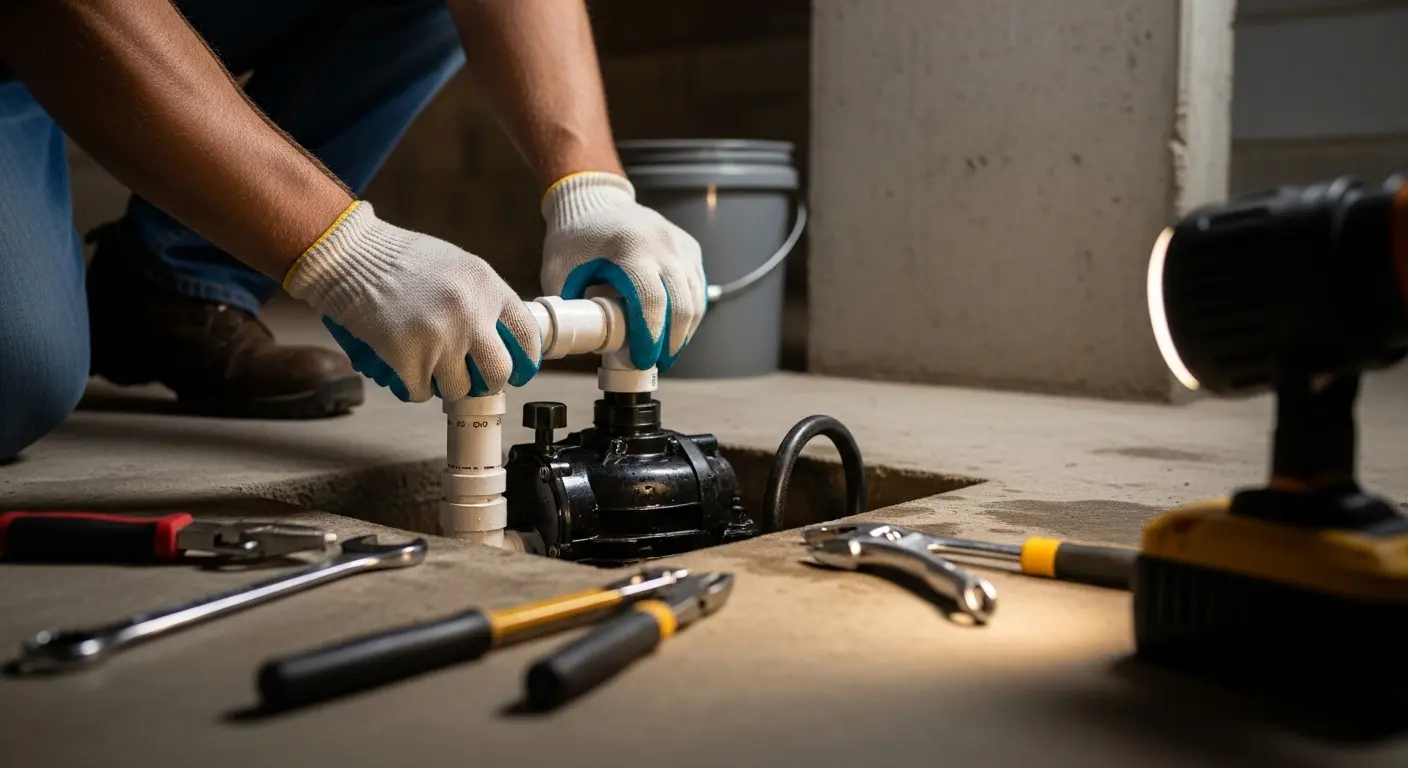
A sump pump sits in your basement doing its job in silence until it stops working. Most property owners do not think about it until water starts pooling on the floor. By that point, the damage is already happening. In a city like New York, where heavy rain, aging infrastructure, and underground water levels create constant pressure on below-grade spaces, sump pump services in NYC are something every building owner should take seriously before the problem shows up as a flooded basement.
How Long Does a Sump Pump Last?
The average sump pump lasts between 7 and 10 years. Some last longer with maintenance, and some fail sooner, depending on how often they run and the volume of water they handle. If your pump is approaching that age range and you have not had it inspected, you are operating on borrowed time.
For commercial properties in NYC, especially those with basements used for storage, mechanical equipment, or tenant access, a sump pump failure can lead to thousands of dollars in damage within hours. Knowing when the pump is starting to fail gives you the chance to act before it gives out.
Also Read:
Warning Signs That Point to Sump Pump Problems
The Pump Runs Without Stopping
A sump pump that runs nonstop, even during dry weather, is struggling. This can mean the float switch is stuck, the check valve has failed, or the pump is undersized for the water volume entering the pit. Continuous operation wears out the motor faster and increases your electricity costs without solving the underlying issue.
If you hear the pump cycling on and off every few minutes or running for hours without pause, that is a sign you need sump pump services in NYC to diagnose and fix the root cause.
Strange Noises During Operation
A functioning sump pump produces a low hum when it runs. If you start hearing grinding, rattling, or banging sounds, something inside the pump has shifted or broken. Common causes include:
- A jammed or damaged impeller
- Loose internal components are hitting the housing
- Worn bearings in the motor
- Debris is stuck inside the pump intake
These noises do not go away on their own and will get worse until the pump fails.
Water in the Basement Despite the Pump Running
This is one of the most frustrating signs for property owners. The pump is on and running, but water is still collecting on the floor. This points to either a pump that has lost suction power, a clogged discharge line, or a pit that is filling faster than the pump can handle.
According to the Insurance Information Institute, water damage and freezing are among the most common homeowner insurance claims in the United States, with an average claim cost of over $12,000. For commercial properties, the costs go higher because of equipment, inventory, and business interruption.
Visible Rust or Corrosion on the Pump
If the pump casing shows rust, corrosion, or discoloration, the internal components are likely in worse shape. Corrosion affects the impeller, the motor housing, and the electrical connections. A corroded pump is less efficient and closer to failure than one that still looks clean.
The Pump Does Not Turn On at All
If the float rises and the pump does not activate, the motor may have burned out, the float switch may have failed, or there could be an electrical issue at the outlet or breaker. Before assuming the worst, check the power source and test the float manually. If neither of those solves the problem, the pump needs professional attention.
Repair vs. Replacement: How to Decide
Not every sump pump issue requires a full replacement. Some problems are fixable with a part swap or adjustment.
Repairs make sense when:
- The pump is under 5 years old, and the issue is a float switch or a check valve
- The motor still works, but a clogged intake is reducing performance
- The discharge pipe is blocked or frozen, but the pump itself is functional
Replacement makes sense when:
- The pump is over 7 years old and showing multiple symptoms
- The motor has burned out, or runs but does not move water
- Corrosion has spread across the casing and internal parts
- The pump cannot keep up with the water volume in the pit
For commercial basements in NYC with high water table exposure or large below-grade square footage, upgrading to a higher-capacity pump or adding a battery backup system is worth considering during replacement.
Read More:
Why NYC Buildings Face Higher Sump Pump Demands
New York City’s underground water levels, combined with aging sewer infrastructure and frequent heavy rainfall, put more pressure on sump pumps than most other cities. Buildings near waterfront areas in Brooklyn, Queens, Lower Manhattan, and the Bronx deal with groundwater intrusion that keeps pumps running for long stretches. Add storm surges and flash flooding from major rain events, and the demand on these systems increases further.
Sump pump services in NYC should include not just repair and replacement but also annual inspections to catch problems before they lead to flooding.
How Unclog NYC Can Help
Unclog NYC provides sump pump services in NYC for commercial buildings, residential basements, and multi-unit properties across all five boroughs. Our plumbing company handles inspections, repairs, pump replacements, and backup system installations. We identify the problem, explain the options, and get the job done before water damage turns a fixable issue into a costly disaster.
The next heavy rain could be the one that floods your basement and damages everything in it. Call us now and get the pump checked before the water makes the decision for you.