A hidden water leak rarely announces itself. It drips behind a wall or under the floor for weeks, running up your bill and feeding mold long before you notice a single drop. Catching it early can save you thousands in repairs, which is why the small clues matter so much.
This guide shows you what to watch for and when to call a plumber in NYC before a slow drip turns into a wrecked ceiling.
Your Water Bill Climbs While Your Usage Stays the Same
One of the first hints of a hidden leak shows up in your mailbox, not on your wall. When your water bill keeps rising month after month, and nothing about your routine has changed, water is escaping somewhere in your plumbing. The waste adds up faster than most people expect. A single faucet that drips once per second loses about 3,000 gallons in a year, and a running toilet can waste 200 gallons or more in a single day.
The bigger picture is worse. The EPA reports that household leaks waste close to 1 trillion gallons across the country each year, with the average home losing over 10,000 gallons on its own. If your bill jumps and you cannot point to a house guest, a filled pool, or any change in habit, treat that spike as the warning it is. Water leaking around the clock shows up on the bill long before it shows up on the wall.
Read More:
You Hear Water Running When Every Tap Is Off
Stand still in a quiet house with all the faucets closed, and just listen. A faint hiss, drip, or trickle inside the walls points to water moving where it should stay sealed. This sound usually comes from a cracked or loose pipe feeding a slow leak behind the surface. It hides easily under the noise of a busy day, so the best time to catch it is late at night when the home goes silent.
If you press your ear near a wall or floor and hear water when nothing is running, a hidden water leak is the likely cause. That sound will not fade on its own, and the pipe behind it only gets worse with time. Marking the spot where the sound is loudest also helps a plumber narrow the search later.
A Musty Smell Fills a Room That Should Stay Dry
Your nose often finds a leak before your eyes do. A damp, musty smell in a bathroom, basement, or near a closed wall means moisture is trapped somewhere close by. That smell comes from mold and mildew, which feed on the exact water a hidden leak keeps supplying. The EPA notes that mold can start growing in as little as 24 to 48 hours once moisture builds up, so the odor can arrive well before any visible patch does.
A stuffy smell that lingers in one part of the house and grows stronger over a few days is your home telling you water is pooling out of sight. This sign matters for your health too, since mold spores spread through the air you breathe. Anyone in the house with asthma or allergies tends to feel it first, with a cough or stuffy nose that eases the moment they step outside.
Stains, Bubbles, or Soft Spots Show on Walls and Ceilings
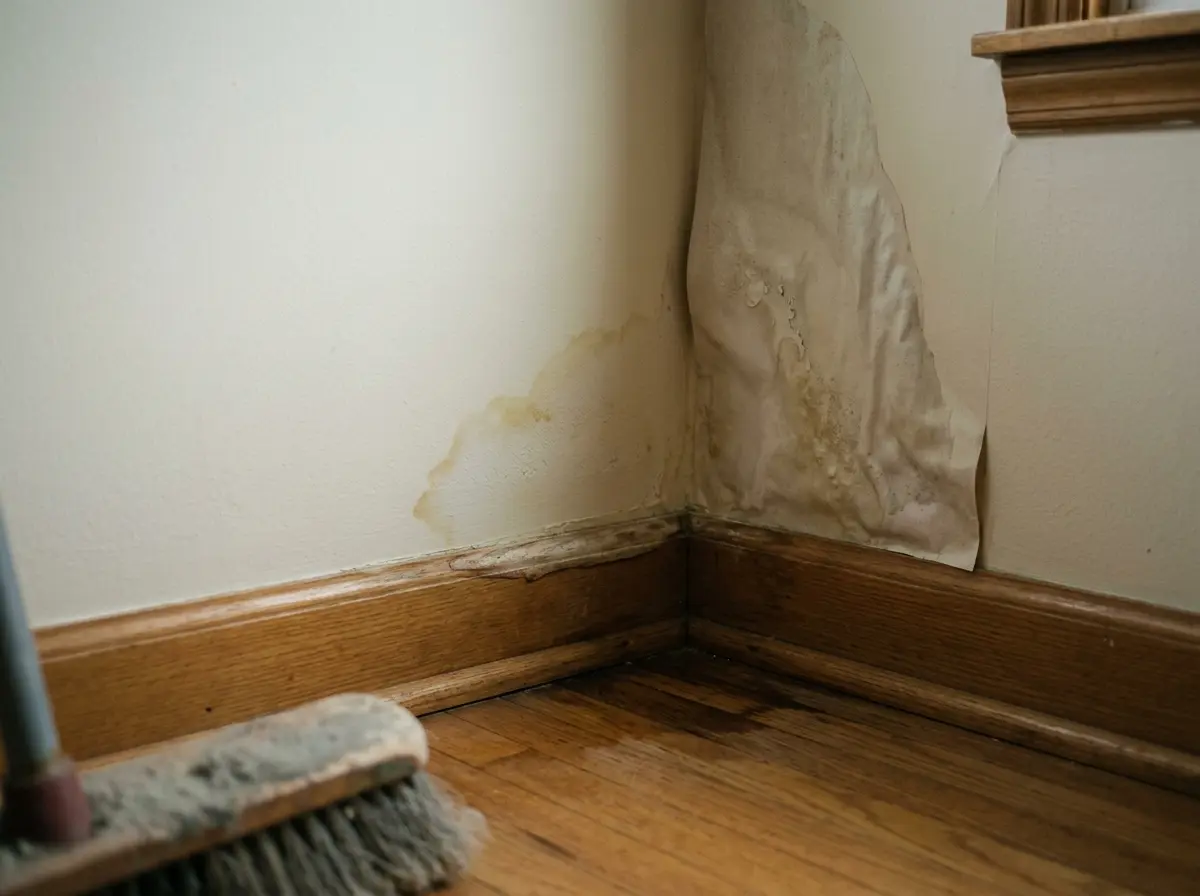
When a leak has been running a while, it starts to mark the surfaces around it. Yellow or brown stains on a ceiling, bubbling or peeling paint, and warped or sagging drywall all point to water moving behind the surface. You might also find a soft, spongy spot on a wall or floor that gives a little when you press it with your hand.
These marks mean the water has already reached your drywall, insulation, or framing, so the damage is spreading past the pipe itself. This is where repair costs climb, since a simple pipe fix turns into replacing drywall, treating mold, and sometimes swapping out subfloor. Insurance payouts for water damage often start around $3,000 and rise from there. Catching a leak at the stain stage still beats waiting for a ceiling to sag or a patch to give way.
Your Water Pressure Drops in One Part of the Home
A sudden drop in water pressure is another clue people brush aside. Water follows the path of least resistance, so when a pipe cracks or a joint loosens inside a wall, part of the flow that should reach your faucet slips into the structure instead. That missing flow shows up as weak pressure at the tap.
Check the pressure at a few different fixtures around the house. If only one area feels weak while the rest run at full strength, the leak is likely upstream of that spot. Weak pressure on its own can have other causes, but paired with a high bill, a musty smell, or a stain, it makes a hidden leak much more likely. Trust the combination rather than any single reading.
Other Quiet Clues Worth a Quick Check
A few smaller signs are easy to shrug off, yet each one earns a second look:
- Wet or soggy patches in the yard with no rain, which point to an outdoor line leak
- A warm spot on the floor, which can mean a hot water line leaking under the slab
- Mold that keeps coming back on a wall far from any shower or sink
- Cracked or shifting tiles in a bathroom or kitchen floor
- A water meter that keeps moving after you shut off every tap
Any one of these alone might be minor. Two or three showing up together tell a clearer story, so pay attention to the pattern instead of waiting for proof from a single clue.
How to Confirm a Hidden Leak at Home
Before you call anyone, you can run a simple test that most homeowners handle on their own. Your water meter gives you a straight answer in about an hour. Here is how to do it:
- Turn off every faucet, appliance, and water-using device in the home
- Find your water meter and note the exact reading
- Wait one to two hours without touching any water
- Check the meter again, and if the number moved, water is leaking somewhere
You can also press a moisture meter or even a screwdriver handle against a suspect wall to feel for damp, soft areas. These checks confirm whether a leak exists, though they rarely tell you the exact spot behind the surface. Pinning down the source calls for professional leak detection, which uses acoustic sensors and thermal cameras to find the leak without opening every wall.
Also Read:
What to Do the Moment You Spot a Leak
Once you suspect a hidden leak, acting quickly keeps both the damage and the cost down. Start by shutting off the main water valve if the leak seems active, since that stops more water from feeding the problem while you sort out the next step. Avoid cutting into walls or ceilings on a guess, because opening the wrong spot only adds repair work on top of the leak you already have.
The safe move is to bring in a licensed plumber in NYC who can trace the leak, reach the pipe, and fix it the right way. For a leak that is already flooding or spreading fast, emergency plumbing help is the right call, since every hour counts once water is loose behind your walls. A trained plumber also checks nearby pipes for the same wear, so you fix the cause and not just the symptom.
Call a Plumber in NYC Before the Leak Spreads
A hidden leak never fixes itself, and every day you wait, it feeds mold, weakens your walls, and adds to a bill you can already feel in your gut. What looks like a small drip in a quiet corner today can become a ruined ceiling and a five-figure repair by the time it finally shows itself. Unclog NYC helps homeowners across the city find and stop hidden leaks fast, with careful detection that protects your home instead of tearing it open.
Want the leak found before it costs you any more? Contact us and get a plumber in NYC to your door before the damage spreads any further.